As an active IPO market, Saudi Arabia is providing investors who want to invest in economic growth, market expansion, and Vision 2030 opportunities through new companies in Saudi Arabia that are participating in the IPO process.
When a privately held company offers its shares to the public for the first time and those shares begin trading on the Saudi Exchange (Tadawul), it has completed an IPO. Investors are allowed to buy shares of an IPO in advance of regular market trading being available to the general investor. This provides investors with the chance to buy shares in these brand-new "public" companies at the price established during the IPO subscription process.
Many people in Saudi Arabia and the GCC have invested in IPOs as their first stock market investment. Consequently, before investing your funds into a Saudi IPO, you need to understand how the Saudi IPO Process works.
Quick Answer: How Do Saudi IPOs Work?
A Saudi IPO generally follows a structured process regulated by the Capital Market Authority (CMA).
A company must first get approval from the regulatory agencies and create a prospectus before the start of the offering to raise funds. Then they will provide a process for institutional investors to competitively place orders to help establish the offer price. After the completion of this Pricing process, retail investors will be given an opportunity to subscribe during a defined subscription period.
Once the subscription window closes, shares are allocated based on demand. If demand exceeds supply, investors receive a partial allocation and any remaining funds are refunded. Allocated shares are then deposited into investor accounts before trading begins on the Saudi Exchange.
Understanding this process helps investors make informed decisions and avoid common mistakes during highly anticipated IPO launches.
Why Saudi IPOs Have Become Increasingly Popular
Over recent years, the Kingdom of Saudi Arabia has seen an increase in the size of its capital markets due largely to regulatory reform as well as increased participation from investors and the different initiatives of Vision 2030 that have been created to help diversify the economy of the Kingdom.
New listings continue to emerge across sectors including:
Financial services
Healthcare
Technology
Logistics
Real estate
Consumer businesses
Energy-related industries
Tourism and hospitality
For investors, IPOs provide an opportunity to participate in a company's public market journey from the beginning rather than purchasing shares after months or years of trading history.
Many investors actively search for:
How to invest in Saudi IPOs
Upcoming Saudi IPOs
Best Saudi IPOs to buy
Saudi stock market IPO opportunities
How share allocations work in Saudi Arabia
Understanding the mechanics behind these offerings can help investors evaluate opportunities more effectively.
Understanding the Saudi IPO Structure
Most Main Market IPOs on Tadawul follow a two-stage structure.
Stage One: Institutional Book-Building
The process begins with institutional investors.
Asset managers, investment funds, banks, and other qualified institutions submit bids indicating the number of shares they would like to purchase and the price they are willing to pay.
This process helps determine:
Market demand
Investor appetite
Appropriate valuation
Final offer price
Retail investors do not participate in this stage.
The final offer price announced after book-building becomes the subscription price available to individual investors.
Stage Two: Retail Subscription
Following the completion of book-building, retail investors are given an opportunity to subscribe for shares.
During this period, eligible investors can submit subscription requests through participating financial institutions and licensed brokers.
Investors typically specify:
Number of shares requested
Available cash for subscription
Confirmation of eligibility requirements
The exact subscription terms, allocation methodology, and investor eligibility are always detailed in the official prospectus.
Step-by-Step Guide to Subscribing to a Saudi IPO
Step 1: Review Upcoming IPO Announcements
The first step is monitoring upcoming offerings.
Investors can follow announcements through:
Capital Market Authority (CMA)
Saudi Exchange (Tadawul)
Official prospectuses
Licensed financial institutions
Market news platforms
Reviewing announcements early allows investors to prepare funds and evaluate opportunities before subscription windows open.
Step 2: Read the Prospectus
The prospectus is the most important document associated with any IPO.
It contains information about:
Company operations
Financial performance
Business risks
Shareholder structure
Use of proceeds
Offer size
Subscription dates
Allocation process
Many investors focus only on market excitement surrounding an IPO. Reviewing the prospectus provides a more objective understanding of the business being offered.
Step 3: Confirm Eligibility
Eligibility requirements can vary depending on the offering.
Investors should always verify whether they qualify before attempting to subscribe.
The prospectus outlines:
Eligible investor categories
Residency requirements
Minimum subscription amounts
Maximum subscription limits
Step 4: Ensure Funds Are Available
Before submitting a subscription request, investors must ensure sufficient cash is available in their investment account.
Funds are typically reserved during the subscription period and adjusted once final allocations are confirmed.
Don't have an investment account yet? You can open a Raseed account in minutes, deposit as little as $5, and be ready for the next IPO the moment it opens for subscription. Open your Raseed account now →
Step 5: Submit Your Subscription
Once the subscription window opens, investors can place their request through their broker or participating financial institution.
Most modern investing platforms allow investors to complete this process digitally without visiting a branch.
Step 6: Wait for Allocation Results
After subscriptions close, the allocation process begins.
Investors may receive:
Full allocation
Partial allocation
No allocation (in rare cases)
Allocation results depend primarily on investor demand relative to available shares.
Step 7: Receive Shares and Begin Trading
Allocated shares are deposited into investor accounts before trading begins on Tadawul.
Once listed, the stock trades like any other publicly listed company on the exchange.
How IPO Share Allocation Works
One of the most common questions investors ask is:
"Will I receive all the shares I apply for?"
The answer depends on demand.
If demand exceeds the number of shares available, the IPO becomes oversubscribed.
For example:
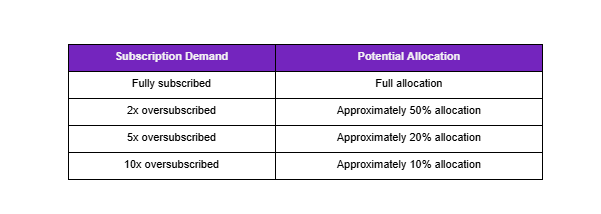
Actual allocation methodologies vary by offering and are explained in the prospectus.
Any funds associated with unallocated shares are generally refunded to investors after allocations are finalized.
What Investors Should Evaluate Before Investing in a Saudi IPO
Company Fundamentals
Strong revenue growth alone is not enough.
Investors should assess:
Profitability
Cash flow generation
Debt levels
Competitive positioning
Future growth potential
Valuation
A great company can still be a poor investment if offered at an excessive valuation.
Comparing valuation metrics against similar publicly traded companies can provide valuable context.
Industry Outlook
Industry trends often influence post-listing performance.
Investors should consider:
Market growth potential
Regulatory developments
Competitive landscape
Vision 2030 alignment
Lock-Up Periods
Major shareholders are often restricted from selling shares immediately after listing.
Understanding lock-up expiration dates can provide insight into future share supply.
Market Conditions
IPO performance is often influenced by broader market sentiment.
Strong market environments tend to support IPO demand, while volatile markets may create additional uncertainty.
Want to invest in US stocks and ETFs the smart way? Raseed gives you access to thousands of US-listed stocks and ETFs — all from one DFSA-regulated account. No branch visits, no paperwork, no hidden fees. Start investing on Raseed today →
Risks Investors Should Understand Before Subscribing
While IPOs can create opportunities, they also involve risks.
Common risks include:
Limited trading history
Valuation uncertainty
Short-term volatility
Market sentiment shifts
Sector-specific risks
Investors should avoid assuming every IPO will generate immediate gains after listing.
Successful investing requires evaluating fundamentals rather than relying solely on market excitement.
Why Many Investors Combine IPO Investing With Long-Term Portfolio Building
Experienced investors often view IPOs as one component of a broader investment strategy.
Rather than allocating all capital to new listings, they combine IPO opportunities with:
Saudi stocks
US stocks
ETFs
Dividend-paying companies
Long-term growth investments
This diversification approach helps manage risk while maintaining exposure to new market opportunities.
Access Saudi and Global Markets Through Raseed
Whether you're evaluating your first Saudi IPO or building a diversified long-term portfolio, having access to multiple asset classes from a single platform can simplify the investing experience.
With Raseed, investors can access:
Open your Raseed account today and stay ready for upcoming Saudi IPO opportunities while building a diversified investment portfolio from one platform.
The next Saudi IPO could open for subscription any day. Make sure your account is ready before it does — it takes less than 5 minutes to sign up on Raseed. Get started now — it's free →
Frequently Asked Questions
Can foreigners invest in Saudi IPOs?
Eligibility depends on the specific IPO and applicable regulations. Investors should always review the official prospectus for the latest participation requirements.
How much money do I need to subscribe to a Saudi IPO?
The minimum subscription amount varies by offering and is specified in the prospectus.
What happens if an IPO is oversubscribed?
If demand exceeds available shares, investors typically receive a partial allocation and any excess funds are refunded.
Can I sell IPO shares on the first trading day?
Once trading begins and shares have been deposited into your account, you can generally buy or sell them like any other listed stock.
Are Saudi IPOs guaranteed to generate profits?
No. IPOs can rise or fall after listing. Investors should evaluate each opportunity based on company fundamentals, valuation, and risk factors rather than assuming short-term gains.
Related Articles on Raseed Learn
Understanding Risk in Stock Trading | TASI vs US Stocks
5 Steps to Diversify Your Portfolio | Best NASDAQ 100 Stocks from Saudi Arabia
Disclaimer: This article is for educational purposes only and does not constitute investment advice. Investors should review official IPO prospectuses and consult a qualified financial advisor before making investment decisions.