A Very Common Observation With an Important Explanation
Saudi and GCC investors frequently notice a discrepancy: the stock price in their trading app does not exactly match the price shown on a financial news website, in Google Finance, or on another platform they use for research. Sometimes the difference is small. Sometimes it is significant. Understanding why these discrepancies occur is essential for making accurate decisions and for evaluating whether your platform is giving you fair, transparent pricing.
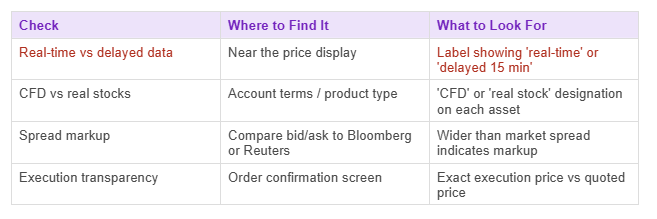
Reason 1: Data Delay — Real-Time vs 15-Minute Delayed Quotes
This is the most common cause of apparent price differences. US stock exchanges NYSE and NASDAQ, charge fees for real-time data. Platforms that pay for this feed display live prices. Platforms that do not pay, or that offer delayed data as a free baseline, show prices from 15 to 20 minutes ago.
During volatile markets earnings releases, Federal Reserve statements, major geopolitical developments the price 15 minutes ago can differ significantly from the current price. If the financial news site you are checking uses delayed data and your trading app shows real-time prices (or vice versa), the difference you see is time, not inaccuracy.
Raseed provides real-time quotes to all users at no additional cost. If you compare a Raseed price to a site showing delayed data, the difference is the delayed site being behind, not Raseed being inaccurate.
Related Reading: Free Level 2 Market Data: Why It Matters and Which Platforms Offer It in GCC
Reason 2: The Bid-Ask Spread
Every stock has two prices at any moment: the bid (the highest current buyer price) and the ask (the lowest current seller price). Most quote feeds show the 'last traded price' the price of the most recently completed transaction. This last price sits somewhere between the current bid and ask and may differ slightly from either.
When you buy a stock, you pay the ask price. When you sell, you receive the bid price. The difference between what you pay to buy and what you receive when selling is the spread and it is a real, unavoidable cost of trading in any liquid market.
Reason 3: Platform-Specific Spread Markups
Some platforms, particularly those advertising 'zero commission' , widen the bid-ask spread beyond the market's natural spread and keep the difference as revenue. This is the mechanism through which zero-commission CFD platforms generate income. The price you see on the platform is not the actual market price, it is an adjusted price that includes the platform's implicit fee.
This markup is invisible in most interfaces. You simply execute at a slightly worse price than the underlying market offered. The difference between what you paid and what the market price was at the moment of execution is the platform's revenue.
Platforms that charge zero commission while marking up spreads are not cheaper, they are less transparent. The cost is hidden in the execution price rather than shown as an explicit fee.
Related Reading: Advanced Charts & Order Book on Raseed: Trading With Clarity, Not Guesswork
Reason 4: Real Stocks vs CFDs
Contracts for Difference (CFDs) are derivative instruments that track the price of a stock without giving you ownership of the underlying share. CFD prices are set by the platform according to its own model and include financing costs, particularly for positions held overnight. This means the CFD price can diverge from the actual stock price — especially for positions held over multiple days.
Raseed exclusively trades real equities. When you buy a stock on Raseed, you own the actual shares at the actual market price, with transparent fees disclosed before execution.
Related Reading: Options vs Stocks: Key Differences for Traders
How to Check Which Type of Pricing Your Platform Uses