
What Is a Limit Order?
A limit order is a type of stock market order that allows you to buy or sell a security at a specific price or better. Instead of accepting the current market price, you decide the maximum price you're willing to pay when buying or the minimum price you're willing to accept when selling.
For example, if a stock is trading at $100 and you only want to buy it at $95 or lower, you can place a buy limit order at $95. Your order will only execute if the stock reaches that price. Similarly, if you own a stock and want to sell it only when it reaches $120, you can place a sell limit order at $120.
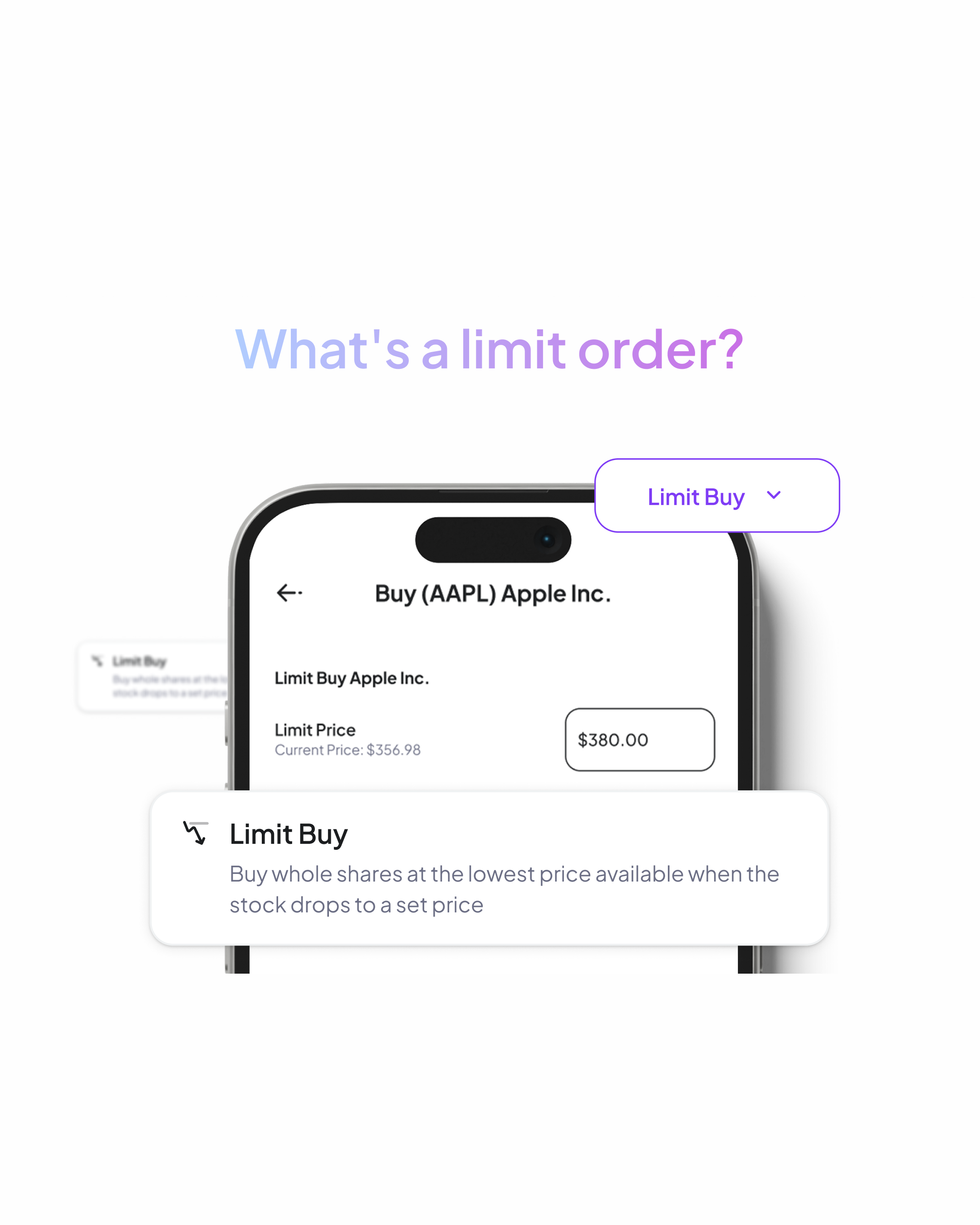
How Does a Limit Order Work?
Limit orders give investors greater control over execution prices. However, unlike market orders, there is no guarantee that the trade will be executed.
- •A buy limit order executes at the limit price or lower.
- •A sell limit order executes at the limit price or higher.
- •If the market never reaches your selected price, the order may remain unfilled.
This trade-off between price control and execution certainty is one of the most important concepts new investors should understand.
When Should You Use a Limit Order?
Limit orders can be particularly useful when:
- •You have a specific entry or exit price in mind.
- •A stock is experiencing high volatility.
- •You are trading outside regular market hours.
- •You want greater control over the price you pay or receive.
Raseed specifically recommends considering limit orders when placing orders outside regular US market hours because stock prices can change significantly between market close and the next trading session.
Limit Order vs Market Order
The key difference is simple:
- •A limit order prioritizes price.
- •A market order prioritizes execution speed.
If you are new to investing, you may also find our guide on What Is a Market Order? helpful for understanding the differences between the two order types.
Common Mistakes Investors Make With Limit Orders
One common mistake is setting a limit price that is too far away from the current market price. If the stock never reaches that level, the order remains unfilled. Additionally, limit orders for U.S. stocks cannot currently be placed at a price that differs by more than 10% from the current market price. If the entered price exceeds this limit, the order cannot be created.
Another mistake is assuming that a limit order guarantees a trade. A limit order guarantees your price conditions, but it does not guarantee execution.