
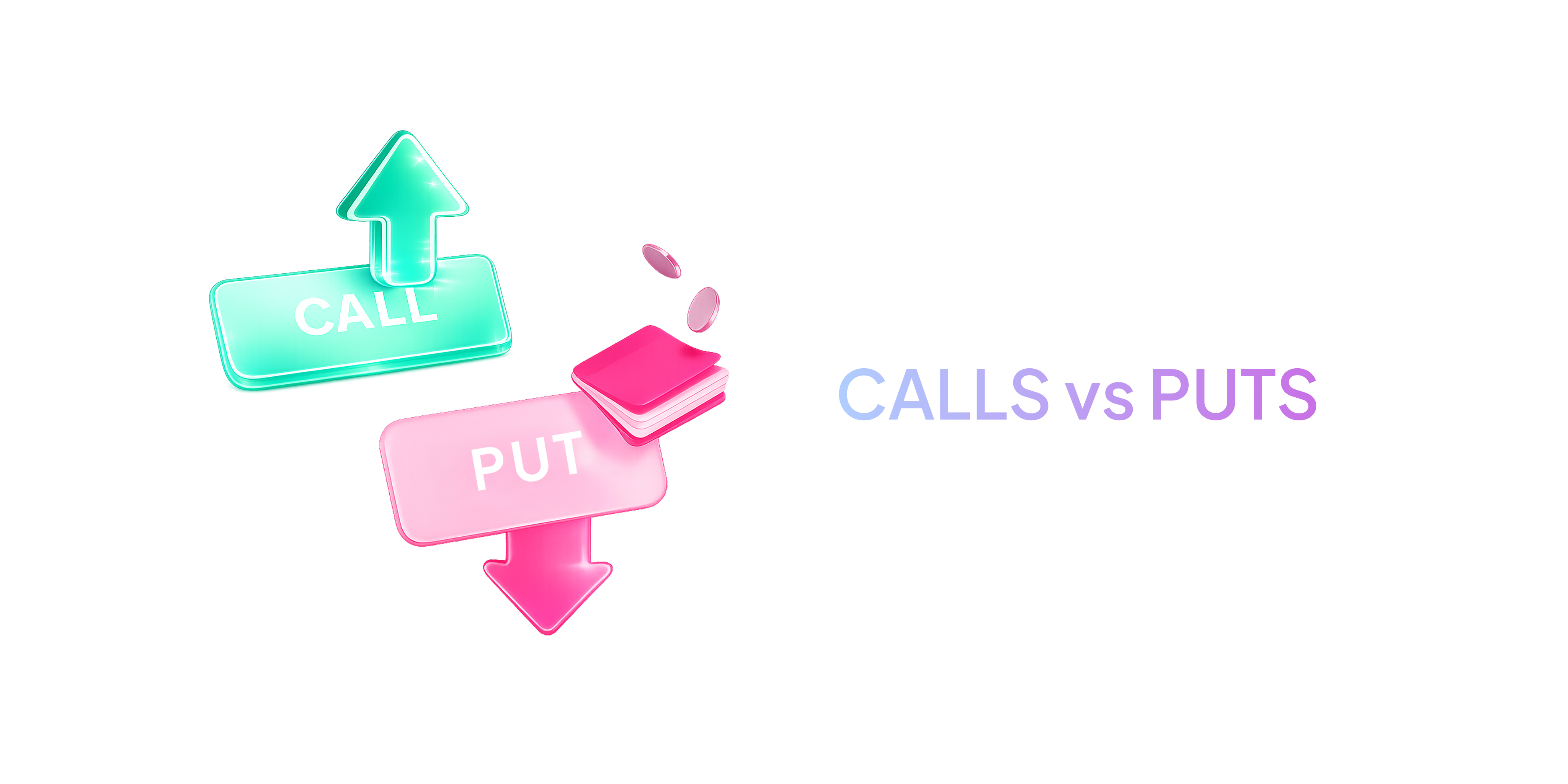
What Are Option Calls and Puts?
In options trading, calls and puts are the two main types of options contracts used by traders to speculate on stock price movements or manage risk in the stock market.
Understanding how call options and put options work is essential for anyone learning the basics of options trading.
What Is a Call Option?
A call option is a financial contract that gives you the right (but not the obligation) to buy a stock at a fixed price (called the strike price) before a specific date (the expiry date).
Investors typically buy call options when they believe the stock price will rise above the strike price before the option expires.
Call options are commonly used in bullish options trading strategies because they allow traders to benefit from upward price movement while using less capital than buying shares outright.
What Is a Put Option?
A put option is a contract that gives you the right (but not the obligation) to sell a stock at a fixed strike price before the expiry date.
Investors usually buy put options when they expect the stock price to fall or when they want protection against downside risk in an existing stock portfolio.
Put options are often used for hedging strategies, helping investors reduce potential losses during market volatility.
What Is the Difference Between Calls and Puts?
The main difference between call options and put options is their outlook on stock price movement:
- •Call options: Used when you expect the stock price to go up.
- •Put options: Used when you expect the stock price to go down.
Both types of options contracts can also be used for portfolio hedging and risk management, not just speculation on short-term price movements.
What Is a Strike Price?
The strike price is the fixed price at which you can buy (call option) or sell (put option) the underlying stock under the terms of the options contract.
Whether an option becomes profitable often depends on how the market price of the stock compares to the strike price before the contract expires.
What Is an Expiry Date?
The expiry date (also called the expiration date) is the last day the option can be exercised.
After this date, the options contract expires and becomes worthless if it has not been exercised or closed before expiration. Because of this time limit, options trading involves time sensitivity compared to traditional stock investing.
What Is the Premium in Options Trading?
The premium is the price you pay to buy an option.
The premium reflects several factors, including:
- •Current stock price
- •Market volatility
- •Time remaining until expiry
- •Supply and demand in the options market
Premium pricing is a key concept in options trading because it determines the cost of entering an options position.
When Do Call and Put Options Make Sense?
A call option may make sense if you expect a stock price to rise but want limited upfront capital exposure compared to buying shares directly.
A put option may make sense if you expect a stock to fall or want to protect an existing investment portfolio from potential downside risk.
These strategies allow traders to manage market exposure in different market conditions.
Are Options Risky?
Yes. Options trading can involve significant risk and may not be suitable for all investors.
While options buyers risk only the premium paid for the contract, options sellers (writers) may face larger losses depending on the strategy used.
Because options are leveraged financial instruments affected by price movement, volatility, and time decay, understanding risk management is essential before trading.
Can Beginners Trade Calls and Puts?
Many investors start with basic options strategies and gradually build knowledge as they gain experience in the stock market.
Educational resources, practice trading, and strong risk management can help new traders better understand how calls and puts behave under different market conditions.
Read more - Options vs Stocks: Key Differences for Traders